The national non-fiction bestseller:
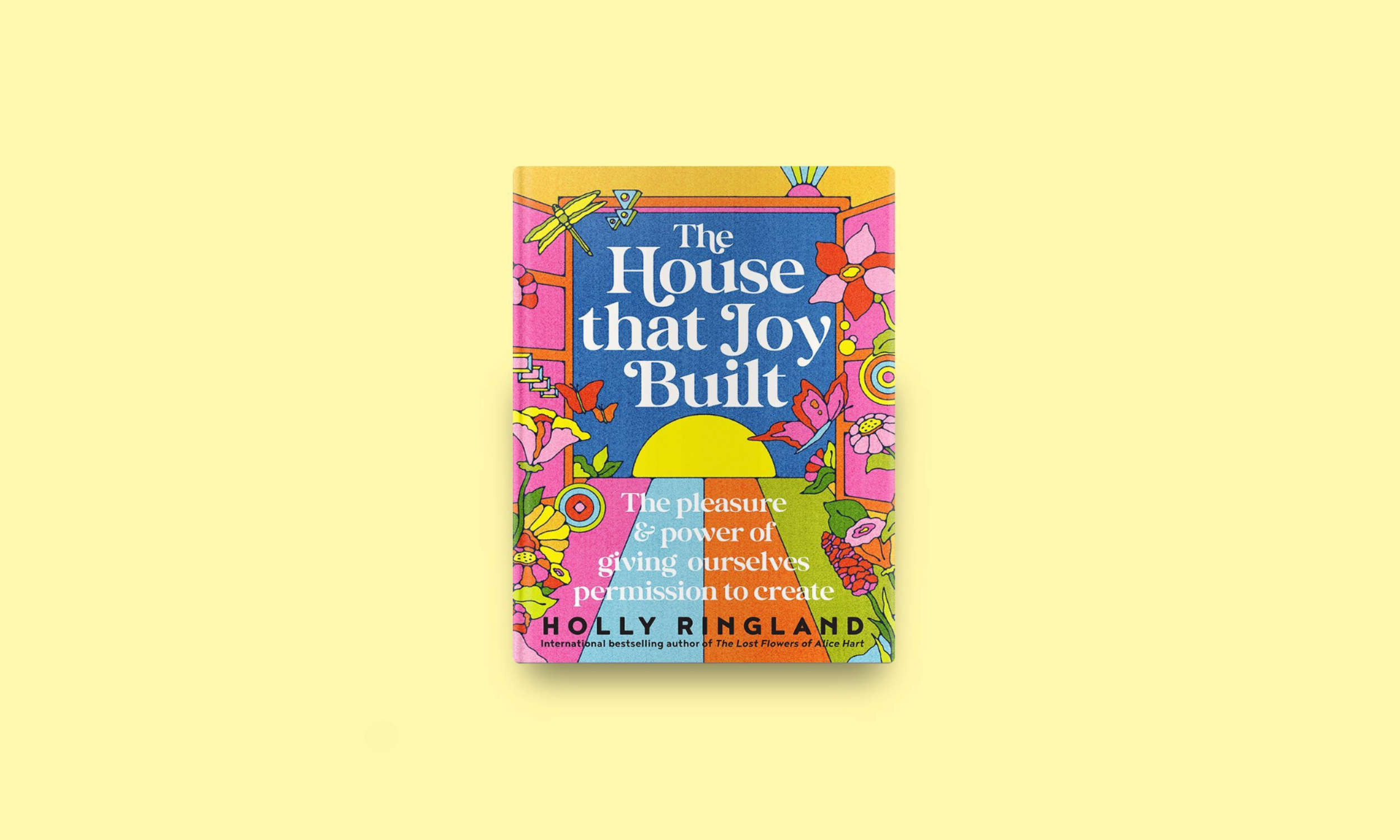
The House that Joy Built
An openhearted clarion call to experience the joy and freedom of creating.
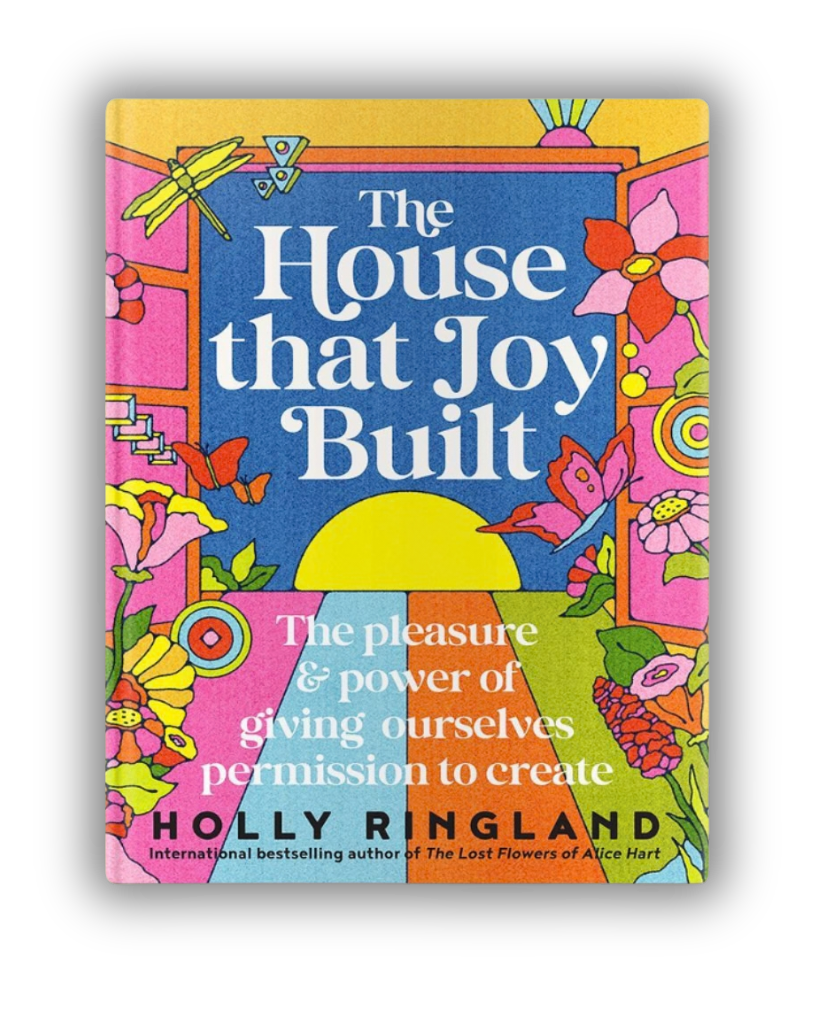
Dear reader, make yourself at home.
My first work of non-fiction is part memoir, part essay, part creative companion, written for anyone whose desire to create has ever been flattened by fear.
Whether you write, garden, cook, dance, sing, sew, build, paint, dream, make, mend or quietly long to begin, this book is an invitation back to the creative joy that already belongs to you.

Booktopia’s Best Non-Fiction of 2023
“This is a really beautiful book, with key points about how to find your own paths toward creativity. It’s a book that draws you in. As a Bookseller I would recommend this book to those who are looking to welcome more creativity into life.”
“A joyous gift from the heart, practical and wise. Blasts those I-can’t-do-this terrors with both barrels.”
“A radiant invitation for writers, makers, and dreamers alike to rediscover the transformative power of creating.”
“A joyous permission slip to any creator who is fearful of putting pen to paper, brush to canvas, plant into soil, or whatever their passion may be. Holly guides the reader into unlocking their restraints and reminds the reader of the life-changing marvel that creating freely can be. (This) is a valuable toolkit for readers to overcome their inner critic and self-doubt.”
“A non-fiction masterpiece.”
“I could rave about how fantastic (this book) is for hours.”
“I started to read the first page — and was hooked.”
Buy The House that Joy Built:
Australia
New Zealand
UK
Canada
USA
The great remembering:
I wrote The House that Joy Built for our forgotten imaginations and the power of recovering pleasure in creativity.
I wrote this book for you, me and anyone who struggles with fear to make the art that calls to their heart.
It’s for those who yearn to write, as well as those who find their creativity elsewhere: gardeners, carpenters, sculptors, jewellery-makers, florists, songwriters, dancers, cooks, painters... anyone who wants to make something but doesn’t because they're afraid. Afraid of feeling vulnerable, of criticism and judgement from others, of not being good enough, of not having enough, of having ‘bad’ ideas, of being too much.
It’s for everyone who has ever felt stuck creatively, for those who don't know how to begin, for those who feel they have so much welling up inside and are just trying to find a way into themselves.
This book is an openhearted clarion call to experience the joy and freedom of creating.
None of us strangers:
The messages I receive from readers sharing with me how this book has helped them return to their creativity are treasures to me.
From the city councillor who rediscovered her love of crocheting and put on an exhibition, to the woman who finally made a space in her home for a writing desk, every letter reminds me that we are each other’s reminders: creativity is an innate part of us. To be disconnected from it is to be disconnected in some way from ourselves and each other.
And when we face what calls us to create, we are never as alone in our fear or strangeness as we might think.
I used to think I was the strangest person in the world but then I thought there are so many people in the world, there must be someone just like me who feels bizarre and flawed in the same ways I do. I would imagine her, and imagine that she must be out there thinking of me, too.
Come on in to
The House that Joy Built
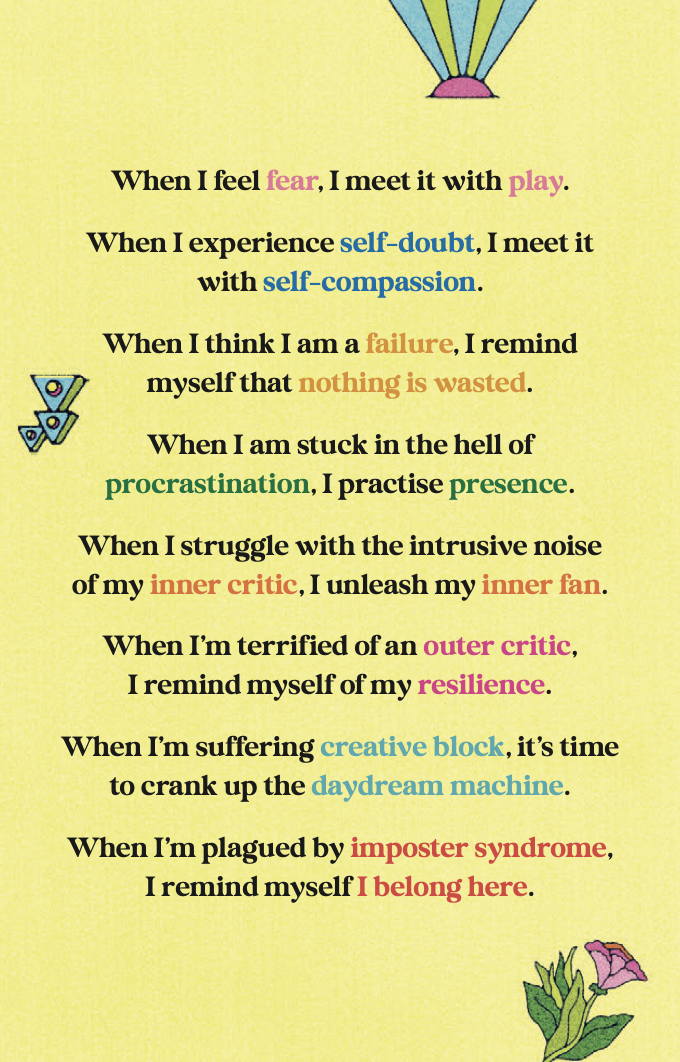
Eight creative fears = eight creative remedies
I structured this book around sharing and exploring eight types of fear-based experiences that I’m confronted with every time I write. (The fears I experience are far from being limited to eight types, but none of us wants this book to rival War and Peace in its length.) I also share and explore how I respond to each of these experiences with actions or states of mind, and describe how I practise them so that I can continue to give myself permission to create and feel joy.
Combined, these make what I call my Toolkit of Unfuckable-with Magic, TUM for short, which I love because unfuckable-with magic does tend to come from gut instinct.
What’s in my TUM may not be the same as what’s in yours. Your TUM could be full of different tools. Sharing my tools and processes is an offering. Take or leave anything that doesn’t resonate. This book is not dictation. Fear and joy, like grief, like love and hope and shame and courage, are universal. And individual. What has been and is my experience might not be yours. None of this is prescriptive.
What The House that Joy Built is:
This book is a series of connected essays that share my experience of acknowledging and understanding how fear in its varying forms blocked my creativity and stopped me for many years from writing the stories knocking at my chest, begging to be told, since I was a kid.
It is about how I’ve learned to tap into my creativity and write from my inner country, that place of magic and possibility, despite feeling deep terror about doing so. And how the power of allowing myself to do the thing I love, the singular thing I’ve known about myself all my life, has blown up many of the ways I’d kept myself small for much of my adult life.
Learning how to let myself write because it’s what I love to do has never meant that I’m not fearful while I’m writing. It means that through writing I also feel joy equal to and greater than the fear that stopped me for all those years. Giving myself permission to write, to create, has changed the way I live.
What The House that Joy Built isn’t:
This isn’t a how-to book. Neither is it a workbook full of exercises. It’s not a step-by-step guide to creative writing, or writing a novel, or being a ‘good’ writer, or becoming any other kind of artist. It is not written by a neurological, behavioural or social science expert.
This book doesn’t assume that we have the same circumstances, come from the same childhoods or backgrounds, or have equal privilege and opportunities. It doesn’t assert that creativity is above, separate from or more important than social justice, racial and cultural equality, employment, housing, food, education and funding for arts programs in all communities. When talking about the power of choice we have as artists, this book doesn’t suggest that gross systemic dysfunction and societal oppression are issues from which any individual can free themselves by choice.
I’m not a qualified therapist, psychologist, psychiatrist or counsellor. Reading about fear, grief, joy, shame, vulnerability, trauma and recovery may be triggering for some people. If this is the case for you, please go gently. Seek the professional help, assessment and support you need if reading this book brings up any issues for you – details for helplines are included in the end pages.
I wrote this book in the hope that it will be of value or meaning to anyone who thinks they are alone in experiencing the chokehold of fear every time they dare to try to answer the creative calling knocking in their chests.
Maybe it’s too good to only share once?
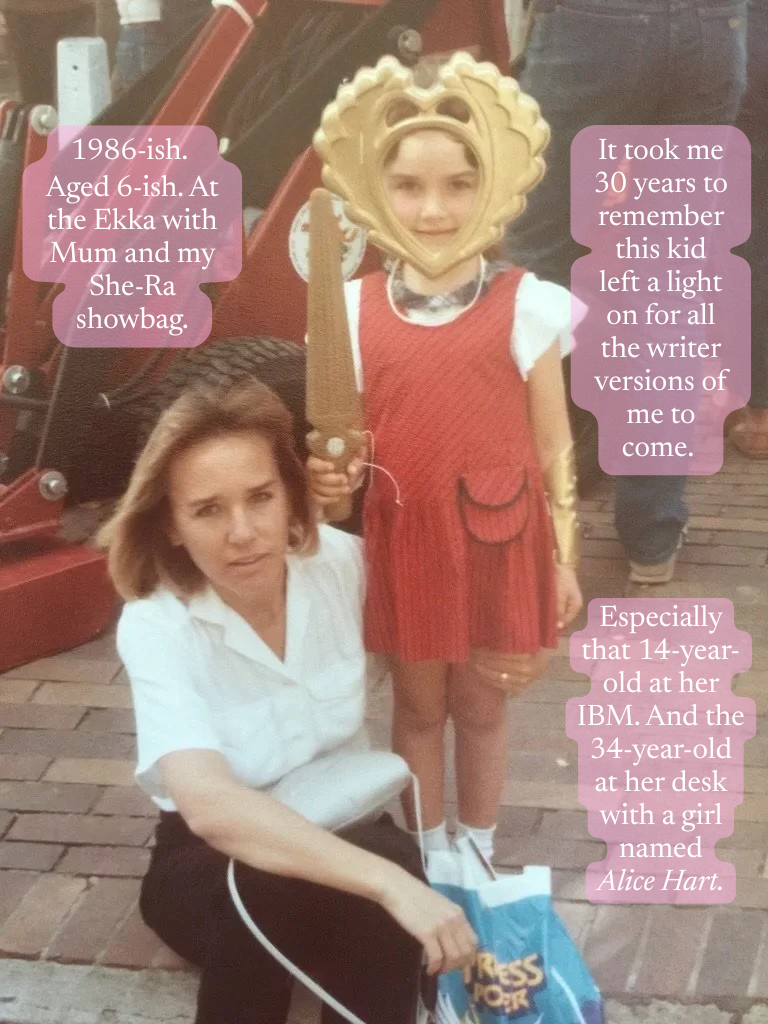
With a light left on*
* why I sign off every letter of The Joy Rise this way, and remind myself of this when writing feels impossible
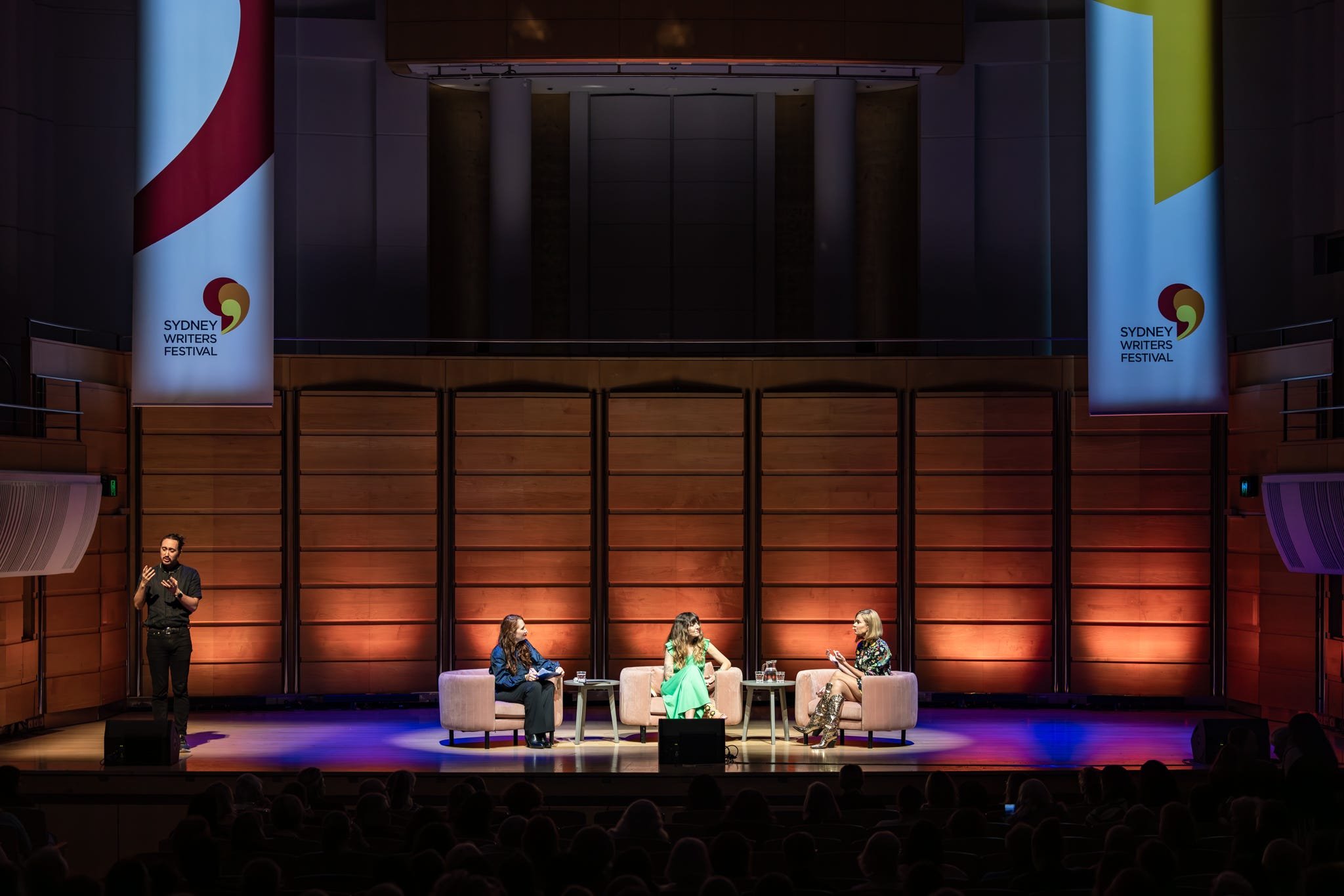
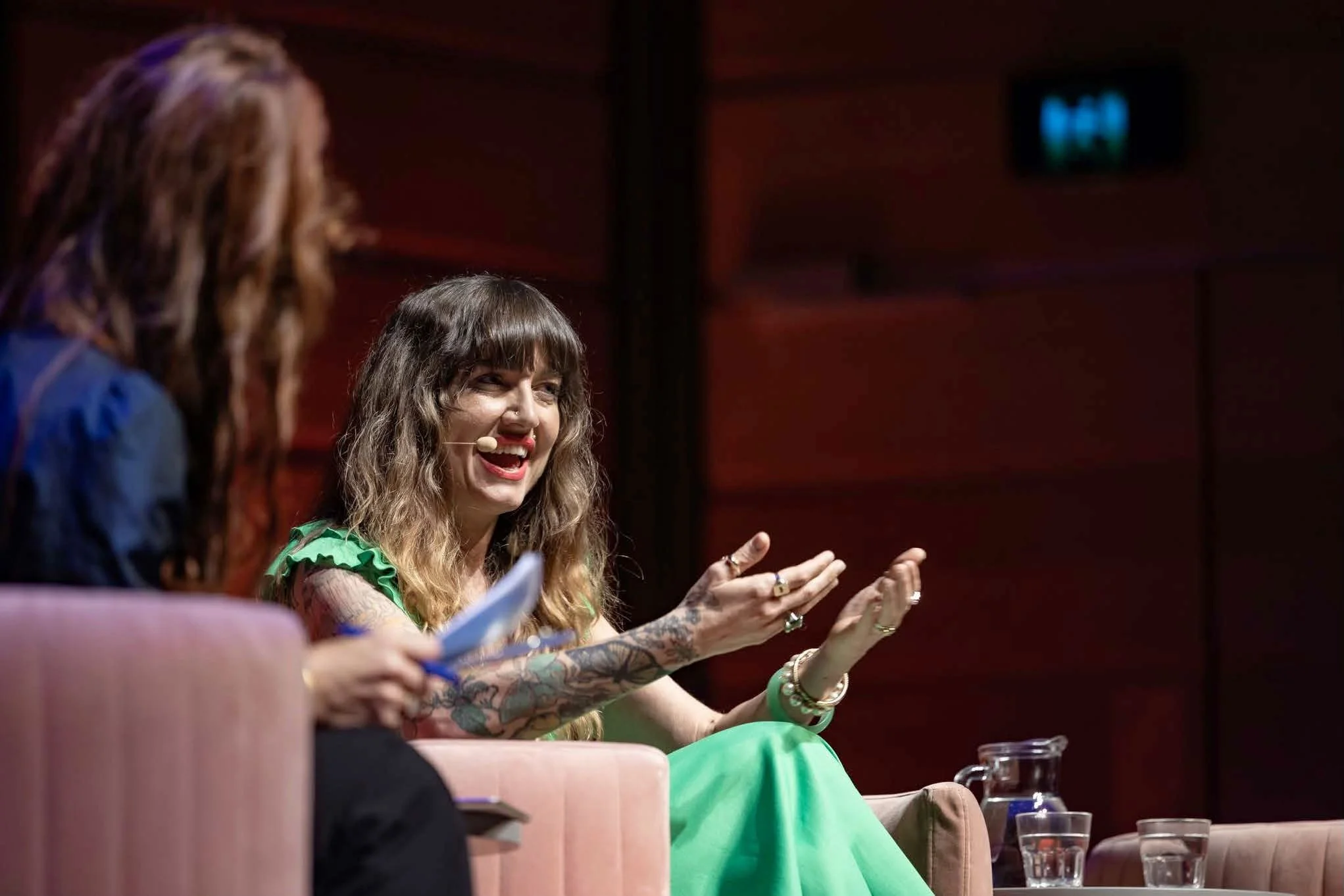
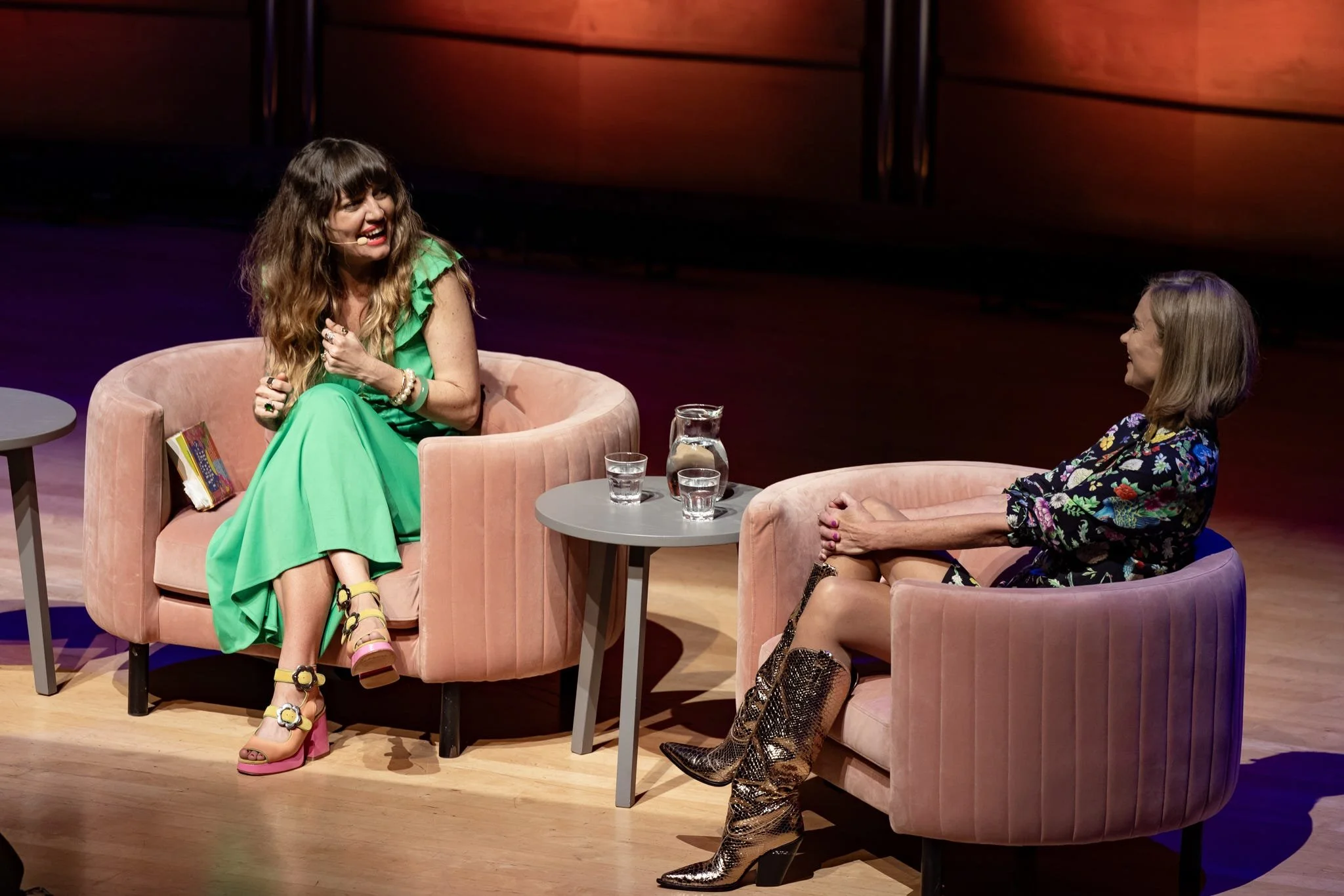
In May 2024, just before I turned 44, I had the honour of speaking about creativity, grace, and joy with the Sydney Writers Festival, at City Hall, alongside beloved broadcaster, journalist and author, Julia Baird, hosted by acclaimed interlocutor, Michaela Kalowski.
This is an excerpt from our conversation, lightly edited for clarity:
MICHAELA: At the beginning of your book, The House That Joy Built, you write about this idea of a house that's inside of us, a house on our inner landscape where the light is always left on. Can you explain what you were describing?
HOLLY: I’m someone who was too scared to write for years because of trauma, grief, fear, and all of the things we all carry around with us, like our inner critics and so on. But when I was writing the opening chapters of The House That Joy Built, I started to think about what it feels like on the other side of that blockage. What it felt like in 2014 when I was writing Lost Flowers, and 2022 when I was writing Seven Skins.
And it felt like returning. It felt like returning to a place inside of myself that I hadn't viscerally felt or remembered since I was little. Whether we’re talking 14 years old, or younger, it was a place where, when I was little, I was never thinking about whether I was any good at play or creating. I was doing it because I enjoyed it so much.
That sense of returning reminded me of what it's like when we come home to a physical place, that for whatever reason, we haven't been able to access or visit for a long time. I thought about landscapes in my life that will call me back to them all my life, because I have loved them while I've been there. That's when I thought that, to me, returning to our imaginations and drawing creativity from there is coming back to our inner country.
And that 14-year-old that sat at her second-hand IBM? She was writing a mash-up of Baywatch fan fiction / River Phoenix love affair stories. It was 1994, everyone.
[AUDIENCE LAUGHTER]
MICHAELA TO AUDIENCE: Aren't you just dying to read that?
HOLLY (laughs): Coming back to the place that the 14-year-old in me wrote from - it's that feeling when you get home, at the end of a long day, a hard day, a long time away from home, and someone's left the light on for you so that you can see as you come in. That young version of myself knew that creativity was worth the joy it brought. Full stop. That was the purpose.
And that was the light that she left on for me.

Listen now:
Make a cuppa, pull up a chair:
more conversations from my house that joy built
AKA a selection of chats I’ve had with amazing people about the power of creativity and joy …
AKA me wanging on for hours because I want you to know your creative joy is the only reason you need to begin.


End Notes
Click below to download the full list of my End Notes and References from
The House that Joy Built.
Welcome to The Joy Rise:
Letters for creative courage and connection from my desk to you.